The steeple cap of Fernando Primo de Rivera
Fernando Primo de Rivera was born in the Spanish nobility and entered the military academy in 1884, emerging from the "bloody means" of suppressing the Cuban War of Independence. In September 1923, Primo de Rivera staged a military coup to overthrow the Liberal government of Prime Minister Manuel Garcia Prieto, declaring the establishment of a "military dictatorship" and self-appointed "head of state". Its rule is based on the slogan of "restoring order" and "combating separatism", but the essence is to suppress democracy and strengthen military participation in politics.
Late 19th century Spanish lieutenant-general side cap
This "Lieutenant General Side Hat (1869-1876)" is one of the treasures of the Spanish National Military Museum (Museo Nacional de Historia Militar, Toledo). Its history can be traced back to the Spanish military system reform in the middle and late 19th century. Critical period. As a headwear specially designed for the rank of lieutenant general (Lieutenant General), it is not only a visual symbol of Spain's "military hierarchy", but also a vivid witness to the integration of European military modernization and local culture in the 19th century.
General Francisco Sarwar Masso Cap
"Francisco Sarwar Masao General cap" (Kepi) is a representative officer's headdress in the 19th century Spanish military history, closely related to the history of Spain's "Carlist Wars" and local military strongmen. This cap is not only the dress of the general's daily and ceremonial occasions, but also the microscopic witness of the rise of local power and the changes of military culture in Spain in the 19th century, bearing the double memory of "military power and local identity.
Hippijapa Straw Hat
"Jipijapa Hat" is one of the most representative traditional handicrafts in Ecuador. It is famous for its unique weaving technology, natural material and profound cultural connotation. It is not only the daily clothing of the Ecuadorian people, but also the material witness of the blending of the country's "Andean indigenous culture" and "Spanish colonial tradition", and is known as the "Pearl of straw art in the Andes".
British Royal Infantry Guard Grenadier Side Cap
"British Royal Infantry Guard Grenadier Side Hat" is a very representative military dress in the military history of Europe from the 18th to the 19th century, which is closely related to the rise and fall of "Grenadier" (Grenadier). It is not only a practical carrier of military equipment, but also the identity and honor of the Royal Infantry Guard.
1861 José María Fontes crowned his double horned hat
"José María Fontes's Coronation in 1861" is a representative ceremonial headdress in Spanish history in the 19th century, which is closely related to Spanish politics, military and aristocratic culture. This double-horned hat (Bicorne) is not only a symbol of Fontes's personal identity, but also a visual epitome of the power and glory of the Spanish "Restauraci" (Renaissance) in the 19th century, carrying a period of "coronation ceremony" and "national identity" "Historical memory.
Franco Commander-in-Chief Side Cap
The "Franco-Commander-in-Chief Side Cap (1938)" is an iconic side cap worn by the Spanish dictator Franco (Francisco) as "Commander-in-Chief of the Nationalist Forces" (Captain General) at the end of the Spanish Civil War (1936-1939). This hat is not only a symbol of Franco's personal authority, but also a microcosm of political and military power in the late Spanish Civil War, carrying complex memories of special historical periods.
The military cap of the Spanish general Juan Prim
It has a chin strap and an Imperial visor in patent black leather. It was tied with six gold thread embroidered cockscomb, with two buttons on either side, and lined with white silk. Collected in the National Army Museum of Spain.
Bilbao Civilian Resistance Auxiliary Volunteer Beret
As an industrial and port town in the Basque Country, Bilbao is an important stronghold of the Republican government (against the Franco dictatorship). In the early days of the war, the Franco forces blockaded Bilbao, and the city faced shortages and medical collapse. The local people spontaneously set up "auxiliary volunteer" groups, wearing berets with unified logo to participate in the rescue, which became one of the symbols of "civilian resistance" in the war.
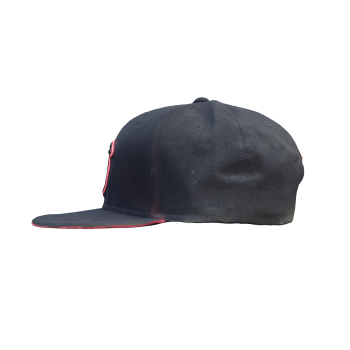
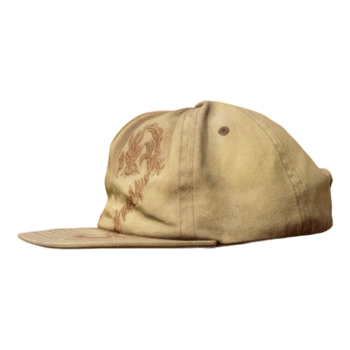
EffingGear-TheJimothy casual hat
Is a unique personality of the hat, with the brand's unique humor and witty design is known. The use of comfortable fabrics ensures that the wearer can enjoy its unique style while also getting a soft and comfortable experience. The plan is full of the spirit of the EffingGear brand, that is, the pursuit of freedom, individual expression and enjoyment of life. The hat features the brand's signature embroidery, demonstrating the brand's attention to detail and commitment to quality. It is an ideal choice for consumers who seek to be different and dare to express their own style. It is a manifestation of an attitude towards life that encourages people to face life with a positive and optimistic attitude.
EffingGearTheCameron casual hat
It is a simple and elegant hat with a low-key gray tone, showing an unobtrusive texture. The fabric has a delicate texture, whether it is close or far view, are very charming. The design pays attention to details, and the embroidered EffingBird logo is one of its characteristics, which can always attract the attention of others. The fit is very good, no matter what activities the user plans to do, it can remain comfortable and firmly worn on the head. Not only suitable for their own wear, but also a good choice for gifts.
Popular Models
Shrine
115 View
King Kong Hercules Wood Carving
166 View
The bell tower of a Japanese temple
189 View
Japanese Samurai Helmet
117 View
Random Model
Ghost Slub Insect 3D Animation Model
140 View
Big blue shark
355 View
Hippopotamus (with 3D action model)
402 View
3D model of inclined mouth pliers
503 View
Dodo Bird (3D Restoration Model)
325 View